Press & Media
Chase Sheffield is the author of The Illusion of Luck, a framework-driven book on how preparation, opportunity, and action create outcomes many people mislabel as luck.
Short Bio
Chase Sheffield is an author, speaker, and advisor whose career spans Deloitte, Army Reserve service, startup operations, and energy development. He wrote The Illusion of Luck as a practical framework for understanding how preparation drives compounding outcomes.
Long Bio
Chase Sheffield grew up in rural Georgia, where his father ran an auto repair shop and his mother worked as a nurse. Together they raised Chase and his sister across both public school and, beginning in high school, a military prep school that would shape much of what followed.
He earned a degree in Industrial and Systems Engineering and a Juris Doctor, then stepped into a career that has since spanned consulting at Deloitte, serving as an officer in the Army Reserve, helping build multiple startup companies, and assembling a growing portfolio of business ventures. At the time of writing, he was serving as the Director of Operations at an energy development startup.
Chase wrote The Illusion of Luck to turn one persistent question into a framework others can apply to their own lives. He lives with his wife in the South and is still building.
Book at a Glance
- Title
- The Illusion of Luck
- Author
- Chase Sheffield
- Publisher
- Long Horizon Press
- Publication date
- July 1, 2026
- ISBN (paperback)
- 979-8-9957796-0-5
- ISBN (ebook)
- 979-8-9957796-1-2
- Format
- 6x9 inch, 208 pages
- Category
- Business & Personal Development
High-Resolution Assets
Click to download. Feel free to use these assets when writing, recording, or promoting a conversation with Chase.
Download Chapter 1 (PDF)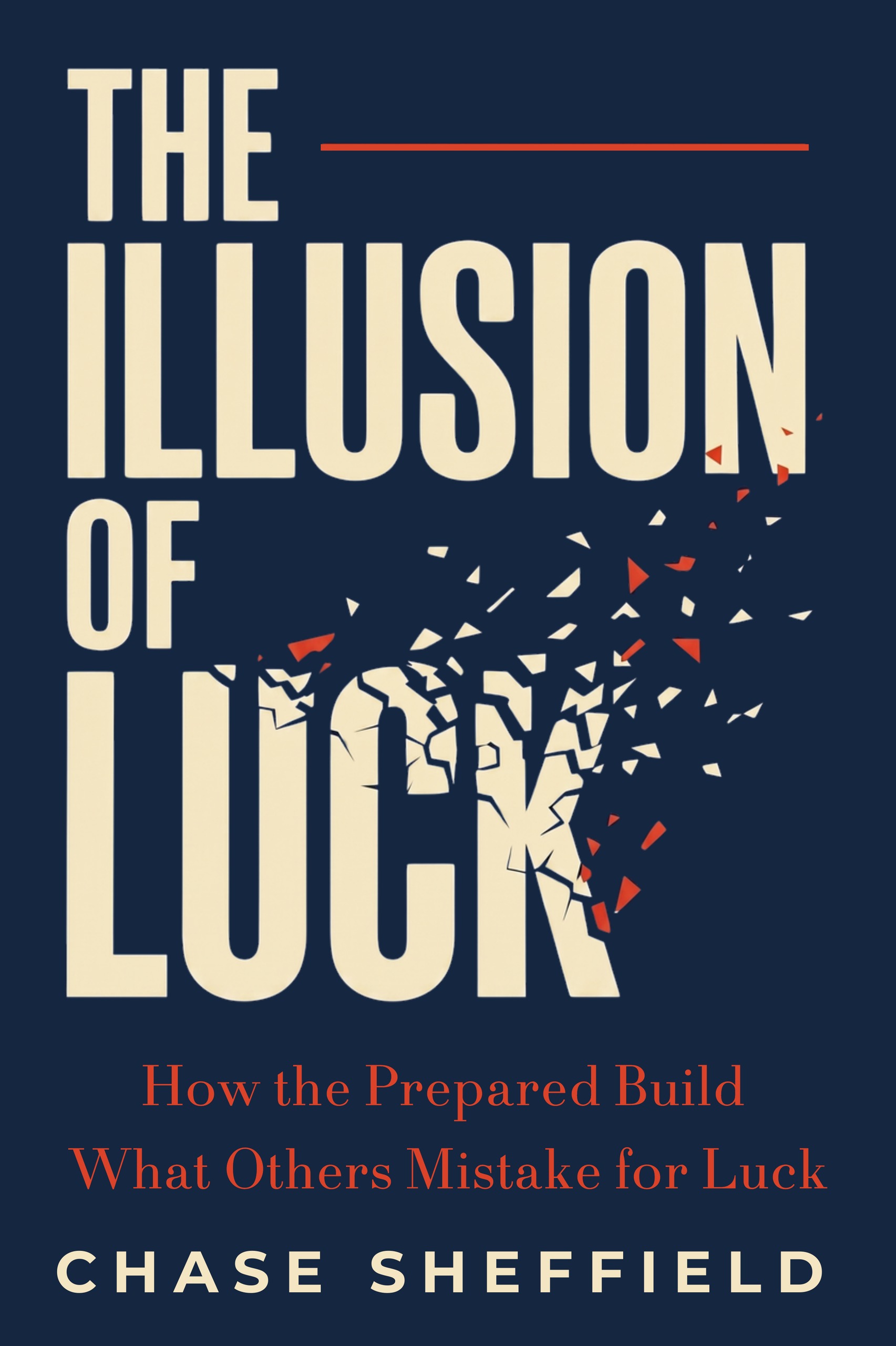

Sample Interview Questions
What made you write this book?
What is the framework behind The Illusion of Luck?
How do you define the difference between luck and preparation?
What role has rejection played in your career?
Who is this book written for?
Media Inquiries
Booking an interview, reviewing the book, or planning coverage? Send a note and Chase will get back to you directly.
Get the free first chapter
Join the list and get Chapter 1 free, plus updates on speaking, podcasts, and new writing.
Chapter 1 is on its way!
Check your inbox.